


At a glance
-
Class 2 mobility scooters have a maximum speed of 4mph and are designed for pavements and other pedestrian areas.
-
Class 3 mobility scooters can travel at up to 8mph on roads and up to 4mph on pavements.
-
Class 3 scooters must meet specific requirements for road use, including lights, indicators, a mirror and a horn.
-
Class 3 scooters must be registered with the DVLA, but there is no vehicle tax to pay.
-
Many Class 2 scooters are lighter and easier to transport, while Class 3 models tend to offer more range and road-going capability.
Choosing a mobility scooter is a wonderful step towards keeping your independence, but working out which type you need can feel a bit confusing. With technical terms, legal classes, and different speed rules, it's completely normal to feel overwhelmed at first.
In this guide, we'll break down the legal rules, design features, and practical differences in clear language. You'll feel completely confident choosing the right model to bring comfort, ease, and freedom back to your daily routines.
What are the main differences between Class 2 and Class 3 mobility scooters?
The biggest difference is where you can use them and how fast they can travel.
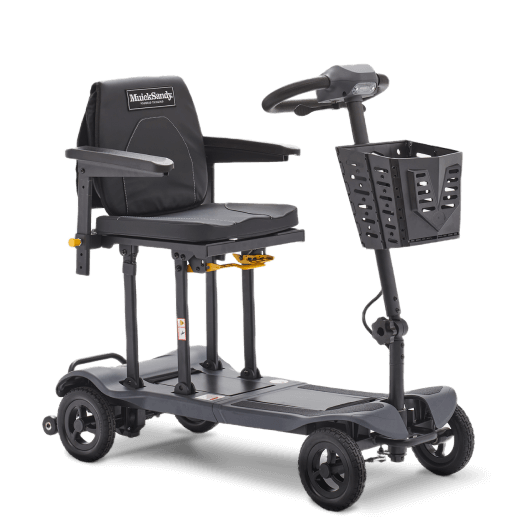
Class 2 mobility scooters have a maximum speed of 4mph. They are designed primarily for pavements and other pedestrian areas. Many are compact, and some fold or dismantle so you can take them in a car.
Class 3 mobility scooters can travel at up to 8mph on the road and must be limited to 4mph when used on pavements. They are designed for road use as well as pedestrian areas and need to meet additional equipment and registration requirements.
In practical terms:
-
Class 2 scooters: A good fit for pavement journeys, shopping trips, pedestrian areas and people who want a scooter that is easier to transport by car.
-
Class 3 scooters: Designed for people who want the option of travelling on public roads as well as pavements, often over longer distances.
Class 3 scooters also tend to be larger and heavier, although size and weight vary between individual models.
How do legal requirements compare for Class 2 and Class 3 scooters?
In Great Britain, different rules apply depending on your scooter's class.
Here are the main differences:
|
Legal feature |
Class 2 mobility scooters |
Class 3 mobility scooters |
|
Maximum speed |
4 mph |
8 mph on roads, 4 mph on pavements |
|
Allowed driving areas |
Pavements, footpaths, pedestrian areas |
Roads, pavements, footpaths |
|
Road legal status |
No (crossing roads only) |
Yes |
|
Speed limiter switch required |
No |
Yes (must cap speed at 4 mph on pavements) |
|
DVLA registration needed |
No |
Yes (Form V55/4 for new, V55/5 for pre-owned) |
|
Annual vehicle tax |
None |
Required (£0 rate, registered with DVLA) |
|
Minimum user age |
No legal age limit |
14 years old |
|
Recommended insurance |
Third-party liability |
Third-party liability |
Neither Class 2 nor Class 3 scooters can be used in cycle lanes. Cycle tracks are different: these are separated from the road, and Class 2 and Class 3 mobility scooters can use them.
You may also come across the term “invalid carriage” when reading government guidance. This is the legal terminology used in the regulations for mobility scooters and powered wheelchairs.
You do not need a driving licence or driving test to use a Class 2 or Class 3 mobility scooter.
Insurance is not legally required for either class, although government guidance recommends having cover. Third-party insurance can provide protection if you accidentally injure someone or damage their property.
Do you need to register a Class 3 mobility scooter with the DVLA?
Yes. A Class 3 mobility scooter must be registered with the DVLA.
If you're buying a brand-new scooter, the dealer will usually register it for you. If they do not, you can register it yourself using form V55/MV, which is specifically for mobility vehicles.
A used Class 3 scooter should normally already be registered. If you're buying second-hand, check with the seller or use the DVLA vehicle enquiry service to make sure.
If a scooter has never been registered, you can use the same V55/MV form to register it.
Once registered, you'll receive a V5C vehicle log book. You do not have to pay vehicle tax for a mobility scooter registered with the DVLA.
Which mobility scooter class fits your daily lifestyle?
Choosing the right scooter relies on matching its practical features to your home, transportation needs, and daily routines.
-
Indoor storage and charging setup: Class 2 pavement mobility scooters are compact and easily park inside a hallway, porch, or utility room. Class 3 scooters are much larger and usually require a garage, shed, or covered outdoor area with a power socket.
-
Car travel and portability: If you love visiting parks, shopping centres, or family further afield, lightweight Class 2 options offer ultimate portability. Models like our F-1 SuperLite fold down effortlessly in seconds and lift into standard car boots without heavy lifting.
-
Terrain and hill climbing capability: Class 3 8mph mobility scooters feature larger frames, wide pneumatic tyres, and heavy-duty motors. These specifications excel on steep hills, gravel driveways, or unpaved tracks that demand high ground clearance and extra battery power.
-
Daily distance and local errands: If your routine involves popping down to local high-street shops or navigating busy pathways, a Class 2 model offers superior manoeuvrability in tight spaces.
What safety equipment and eyesight rules apply on UK roads?
Driving a Class 3 mobility scooter on public roads carries a clear responsibility to keep yourself and others safe. Under the Road Vehicles Lighting Regulations 1989 and the Highway Code, your scooter must have specific safety equipment before you hit the road.
Your Class 3 scooter needs operational headlights, rear reflectors, direction indicators, hazard lights, and a rear-view mirror. It must also feature a manual speed-limiter switch to instantly cap your speed at 4mph when moving onto a pavement. If you travel along dual carriageways where legal traffic speeds exceed 50mph, UK law mandates a flashing amber beacon for high visibility.
You must also meet clear eyesight rules for road travel. You need to be able to read a standard car number plate from a distance of 12.3 metres (around 40 feet), using your usual glasses or contact lenses if needed. If your vision falls below this standard, stick strictly to Class 2 pavement mobility scooters to keep everyone protected.
How to choose between Class 2 and Class 3 mobility scooters
Before making your final choice, asking yourself a few practical questions will bring complete clarity to your decision.
-
Where will you start and end most journeys?: If your trips begin from your front door on smooth pavements, or if you plan to transport your scooter in a car boot, a Class 2 model is typically the most practical choice.
-
How much storage space do you have at home?: Class 2 folding scooters store neatly indoors in small spaces, while Class 3 models demand substantial garage or shed space with power outlets.
-
How far and fast do you need to travel?: If you travel several miles along country lanes without a car, the higher speed and extended range of a Class 3 scooter can be beneficial.
-
Would you prefer a lightweight model that's easy to manage?: Our lightweight Class 2 scooters provide total independence without the stress of DVLA paperwork, heavy lifting, or complex garage charging setups.
The best way to decide is to see how a scooter feels in your everyday surroundings. Try a free home demo to test the handling, comfort, and steering in your own home without any pressure.
Try our lightweight mobility scooters at home
Discover how easy and liberating daily travel can be with our easy-to-fold lightweight models. Take the next step towards effortless independence and explore our mobility scooters range today, or get in touch to arrange your complimentary, no-pressure home demonstration.
Class 2 and Class 3 mobility scooter FAQs
Can a Class 2 mobility scooter go on the road?
Class 2 mobility scooters are designed for pavements and footpaths with a maximum speed of 4mph. You can't legally drive them on public roads, except when crossing the street safely or where there's no pavement available.
Do you need a driving licence for a Class 3 mobility scooter?
No, you don't need a driving licence or to pass any test to drive a Class 3 mobility scooter in the UK. However, you must be at least 14 years old and follow the Highway Code.
Do I need insurance for a mobility scooter in the UK?
Insurance isn't legally mandatory for Class 2 or Class 3 mobility scooters in the UK. However, official government guidance strongly recommends taking out third-party liability cover to protect yourself against accidental damage or personal injury claims.
Can you drive a Class 3 mobility scooter on the pavement?
Yes, you can drive a Class 3 mobility scooter on pavements and pedestrian pathways. You must use the scooter's built-in speed limiter switch to cap your maximum speed at 4mph to protect pedestrians.