



Wondering how much a mobility scooter costs? The quick answer is that it depends on the style and features you choose. No matter what you go for, you’ll be pleased to know that everyday running costs are usually low.
Travel scooters that fit in the boot of a car, comfy pavement models for daily errands and road-class scooters with lights and higher speeds each sit in different price bands. The more portability, range and comfort you want, the more you’ll typically pay.
Below, you’ll find guidance on how much mobility scooters typically cost, along with advice on what to budget for batteries, charging and other running costs. We’ll explain what affects the price, so you can pick the right scooter for your needs and budget.
Want to try one first? We can bring a mobility scooter to your doorstep so you can try it at home. No pressure, we’re here to help people get moving as best we can.
How much does a mobility scooter cost: typical UK price bands
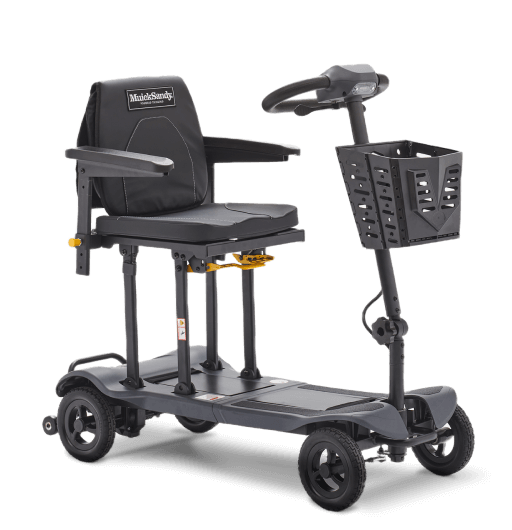
You’ll typically see three types of mobility scooter most often: compact travel/boot scooters (Class 2), everyday pavement scooters (Class 2) and road-class scooters (Class 3).
A broad overview of typical mobility scooter prices in the UK looks like this:
-
Travel/boot (Class 2): Roughly £600 to £1,500, with premium compact or auto-fold models reaching about £2,500 to £3,000.
-
Pavement (Class 2): About £1,000 to £4,000 depending on materials, comfort, range and weight.
-
Road-class (Class 3): Typically £1,500 to £5,000, with some ultra-premium models around £6,000 to £9,000.
These mobility scooter price bands are only a guide and vary with features. Higher battery capacity, more range, better suspension/seat comfort, faster classes, airline-friendly models and auto-folding mechanisms all impact price.
Mobility scooter prices at a glance
Typical UK price bands for mobility scooters:
|
Type (speed class) |
Best for |
Key features |
Typical UK band |
Notes |
|
Travel/boot (Class 2) |
Short trips & car boot use |
Lightweight, folds or splits, smaller batteries |
~£600-£1,500 (premium / auto-fold ~£2,500-£4,000) |
Easiest to lift/store, folding mobility scooter price sits at the higher end |
|
Pavement (Class 2) |
Daily errands & comfort |
Bigger seat, some suspension, longer range |
~£1,000-£3,000 |
Good balance of comfort and portability |
|
Road-class (Class 3) |
Longer distances & mixed paths |
Road-legal kit (lights, indicators, mirrors, horn), larger batteries |
~£1,500-£5,000 (ultra-premium ~£6k-£9k) |
Heavier but most comfortable, road-legal mobility scooter price reflects extra equipment |
Why do mobility scooter prices vary so much?
Think of it like choosing a car. You pay for things like portability, which affects how easily you can lift or fold a scooter. Battery capacity and chemistry dictates how far you can go per charge, while the seat, suspension and tyres all impact comfort.
Speed class matters too. Class 3 scooters include road-legal equipment, which adds cost. Brand support and features such as auto-folding or airline-friendly batteries influence price, as well as the materials used. Premium materials such as carbon fibre come with an added initial cost, but can give you better quality and longevity.
If you need to pop it in a car boot, folding and lightweight models cost more for the extra convenience. If you’re clocking up miles on mixed paths, a larger scooter with suspension and lights could be the best option, but also comes at a cost.
What affects the price of a mobility scooter?
Think about what you want day to day, then match the features. These are the main price drivers and how they help in real life.
-
Portability and weight
Lighter frames and compact designs cost more to make, especially if they fold automatically.
If you lift your scooter into a car boot, a lighter folding mobility scooter can save your back, as well as some time.
-
Range
Bigger batteries go further between charges. Lithium batteries are lighter and charge faster than standard sealed lead-acid.
If you do longer trips or visit friends across town, extra range means fewer charging stops.
-
Suspension, tyres and seat comfort
Added suspension, larger tyres and a supportive, adjustable seat improve ride quality.
If local paths are bumpy, better suspension turns a shaky journey into a smooth one.
-
Speed class
Class 2 scooters are for pavements (up to 4mph). Class 3 add road-legal features (up to 8mph) like lights, indicators and a horn, which raises the price.
If you need to mix road and path or travel further, Class 3 can be worth the extra cost.
-
Brand, reliability and support
Reputable brands invest more in testing, spare parts and friendly aftercare.
It’s easier to keep moving when advice, servicing and parts are easy to get.
-
Special features
Auto-folding mechanisms, airline-friendly batteries for travel, digital displays and advanced lighting all add convenience and cost.
If you fly or store your scooter in tight spaces, these features can make everyday life simpler.
Choosing the right mix keeps costs sensible while giving you the comfort and freedom you need.
Mobility scooter running costs
Good news. Mobility scooter running costs are usually low and predictable. Ongoing costs tend to be batteries, which need to be replaced every so often, as well as the electricity to charge them. You may also need occasional servicing or accessories. Here’s what to expect.
Battery replacement costs
Most scooters use a pair of 12V batteries that usually need to be replaced together. A typical mobility scooter battery replacement cost is about £50 to £300 for the set, depending on battery chemistry and capacity. With good care, batteries often last around one to three years.
Battery care tips
Charge as the manual suggests, avoid storing empty, keep them somewhere dry and moderate in temperature and use the correct charger.
Mobility scooter charging costs
To work out how much it costs to charge a mobility scooter, simply do the following sum:
Battery kWh x electricity tariff price (p/kWh) = cost per full charge
A full charge typically uses around 0.3 to 1.0 kWh. On common UK tariffs that’s about 7p to 18p per charge, and roughly £15 to £30 per year for regular use. Your figure will vary with battery size, mileage and tariff, but this should give you a good idea.
Servicing, insurance and accessories
Allow a little for routine servicing or safety checks, tyres/inner tubes when worn and any accessories you find helpful. This could be things like a storage cover, cane holder or phone mount.
Some people choose insurance for theft, accidental damage, third-party liability or breakdown support. The right mix depends on how often you ride, where you store your scooter and the peace of mind you want. If you’d like personalised guidance, we’re always here to help.
UK mobility scooter classes and rules that affect cost
In the UK, scooters are usually classed as Class 2 or Class 3. This matters for both how you use them and what they cost.
Class 2 (up to 4mph)
Designed for pavements and indoor spaces. They’re lighter and simpler, which keeps prices lower. If you mainly pop to the shops, a Class 2 model is often the most affordable fit.
Class 3 (up to 8mph)
Built for longer trips and some road use. They include road-ready features such as lights, indicators, horn and mirrors, plus bigger batteries and sturdier frames. That extra equipment, plus the added comfort, is why Class 3 costs are typically higher than Class 2.
If you’re leaning towards Class 3, there’s a simple bit of admin to factor in: you must register it with the DVLA. There’s no vehicle tax to pay, and most retailers register new scooters for you.
If not, you can register a new or used scooter yourself using form V55/MV and you’ll receive a V5C log book in the post.
Insurance isn’t legally required for Class 2 or Class 3, but it’s sensible to consider. For the official rules, you can check out the government’s advice on using mobility scooters and powered wheelchairs.
Where you can ride also affects what you choose. You need to keep to 4mph on pavements, while Class 3 can travel up to 8mph on the road. You can’t use bus lanes, motorways or cycle lanes, although cycle tracks that are separate from the road are allowed.
On dual carriageways, use an amber flashing light and avoid ones over 50mph. For safety and compliance, Class 3 users should also be aged 14 or over.
Funding help and ways to pay for a mobility scooter
There are a few straightforward ways to spread the cost of a scooter if you need to. Some people choose mobility scooter finance through a retailer, with monthly payments that fit their budget.
Others look at the Motability scheme. If you’re eligible, you can lease a new scooter or powered wheelchair by exchanging a qualifying mobility allowance. What’s included can change, so always check the latest details on the Motability and government websites.
You may also be able to buy a scooter VAT-free. You can get VAT relief on mobility scooters if the scooter is for your personal use and you meet HMRC’s criteria.
Your retailer will guide you through the simple declaration. If you’d like help weighing up Motability scheme cost, finance or VAT relief, talk to us and we’ll help you get to grips with your options.
New vs used mobility scooters: how to find the best value
Both can be great choices. It depends on your budget and what you need day to day.
A new scooter gives you a full warranty, the latest batteries and features and straightforward aftercare.
A used scooter can lower the upfront cost and still offer plenty of freedom, especially if it’s been well looked after.
When comparing used mobility scooter prices, focus on condition and support, not just the sticker price.
If you’re considering used, check:
-
Battery health: age, type and real-world range. Many models use two 12V batteries replaced as a pair.
-
Service history: receipts for servicing and any repairs or upgrades.
-
Warranty/return policy: what’s covered and for how long; who to contact if something goes wrong.
-
Parts availability: are tyres, batteries and spares easy to source?
-
Fit and comfort: seat support, controls, suspension and tyres for your daily routes.
-
Charger and keys: ensure the correct charger and all keys are included.
If you’re not sure which way to go, start with the type of scooter that fits your life. Then compare new and used options within that category. We’re happy to talk it through and help you find the best value for your needs.
Try a mobility scooter at home
The best way to choose is to try one where you’ll use it most. At home. We can arrange a friendly home visit at a time that suits you.
We’ll show you how the scooter folds, lifts into a car boot, charges and stores. You can adjust the seat and controls for comfort and take a short test around your usual routes. There’s no obligation at any point.
You’ll have time to ask questions about batteries, running costs, Class 2 vs Class 3, finance or VAT relief. Our UK-based team are always here to help you feel confident and in control when you try a scooter at your own home.
Choose the right scooter for your budget
When you’re deciding between mobility scooters, start by picking the type that fits your life. A travel scooter for easy lifting into a boot, a pavement scooter for everyday comfort or a road-class model for longer trips. Then weigh up the features that matter to you: portability, range and comfort.
For lots more information on our mobility scooter range, request a copy of our brochure today.
Mobility scooter cost FAQs
What is a realistic budget for a mobility scooter in the UK?
Typical mobility scooter prices UK look like this: travel/boot (Class 2) ~£600-£1,500, pavement (Class 2) ~£1,000-£3,000 and road-class (Class 3) ~£1,500-£5,000, with some ultra-premium models ~£6,000-£9,000.
What affects the price the most?
Main drivers are portability/weight, battery capacity and chemistry (range), comfort (suspension, tyres, seat), speed class (Class 2 vs Class 3), brand/support and special features like auto-folding or airline-friendly batteries. Pick the features that match your usage and storage needs.
How much does it cost to charge a mobility scooter?
Use the simple formula: battery kWh x electricity tariff price (p/kWh) = cost per full charge. Typical examples are ~7-18p per charge (about 0.3–1.0 kWh per full charge), which is roughly £15-£30 per year for regular use. Your figure depends on battery size, mileage and tariff.
How long do batteries last and what do replacements cost?
With good care, many scooter batteries last around 1-3 years. A typical mobility scooter battery replacement cost is about £50-£300 for the set, depending on chemistry and capacity. Many models use two 12V batteries and they’re usually replaced as a pair for best performance.
Should I buy new or used?
New gives you a full warranty, fresh batteries and the latest features. Used lowers upfront cost if the scooter has been well maintained. Check battery health, service history, warranty/returns, parts availability, fit and comfort, plus that the charger and keys are included before you decide.
Can I pay for a mobility scooter on finance?
You can use retailer finance when buying a mobility scooter, allowing you to spread the cost over fixed monthly payments. We’re always happy to talk you through your options.
Is VAT relief available on mobility scooters?
Often, yes. If the scooter is for your personal use and you meet HMRC eligibility (for example, a long-term illness or disability), you may be able to buy VAT-free. Your retailer will provide a simple declaration form at purchase. Always check the current HMRC guidance before you order.
Do I need insurance for a mobility scooter?
Insurance isn’t a legal requirement for Class 2 or Class 3 scooters, but many people choose it for theft, accidental damage, third-party liability and breakdown support. Costs and cover vary by provider. Think about where you store the scooter, how often you ride and the peace of mind you’d like.