


At a glance
-
You might be able to get a riser recliner chair on the NHS, but it is not routinely provided
-
Eligibility depends on a needs-based assessment, not just your condition
-
An occupational therapist (OT) will usually assess your mobility, safety and seating needs
-
Many services consider riser recliner chairs to be furniture rather than essential equipment
-
This means they are often not funded by the NHS
-
Your local council (adult social care) might offer support or alternatives instead
-
A Disabled Facilities Grant (DFG) does not usually cover standalone chairs
-
If you’re not eligible, other options include alternative equipment, grants or private purchase
-
Getting the right fit and support is more important than simply choosing the cheapest chair
If getting in and out of your chair has become more difficult, a rise and recline chair can make everyday life feel much easier.
But can you get a riser recliner chair on the NHS?
The answer typically depends on a formal assessment, your individual needs and local policy. In many cases, these chairs aren’t routinely provided, so you might need to explore other options too.
This guide explains how it works, who can qualify and what to do if you’re not eligible.
Can you get a riser recliner chair on the NHS?
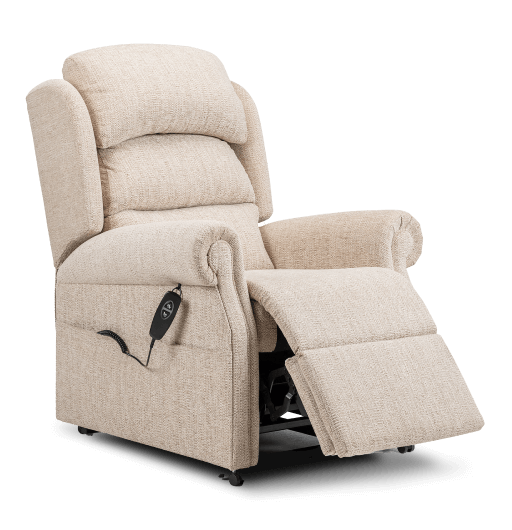
In some cases, yes, but not as standard. A riser recliner chair helps you sit, recline and stand more easily. While that can be important for safety and independence, the NHS usually focuses on equipment that is considered medically essential.
Because of this, riser recliner chairs are often classed as furniture rather than medical equipment. This means they are not always funded, even if they would make daily life easier.
So while NHS funding for mobility equipment UK does exist, a riser recliner chair is not something you can simply request without assessment.
Who qualifies for a riser recliner chair through the NHS?
Eligibility depends on how your condition affects your daily life. The NHS will usually look at whether the chair is necessary for your safety or mobility, rather than whether it would simply make things easier. You could be considered if you:
-
Cannot stand safely from your current chair
-
Are at risk of falls when sitting or standing
-
Struggle with basic transfers at home
-
Need specific seating support for posture or mobility
However, having a condition like arthritis or reduced strength does not automatically mean you will qualify. The key question is whether the chair is seen as medically necessary rather than simply helpful for comfort.
How do you apply for a riser recliner chair?
The process usually involves referral and assessment:
1. Speak to your GP or healthcare professional
Start by discussing your situation with your GP, physiotherapist or another healthcare professional. They can guide you or refer you to the right service.
2. Have an occupational therapist assessment
An occupational therapist (OT) assesses how you manage everyday tasks safely. During an occupational therapist assessment, they may look at:
-
How you sit and stand
-
Your current chair setup
-
Your risk of falls
-
Your posture and support needs
This helps determine whether a riser recliner chair is suitable, or if another option would work better.
3. Receive a decision
After the assessment, you may:
-
Be approved for support
-
Be offered alternative equipment
-
Be told a riser recliner chair is not funded
Decisions can vary depending on your needs and your local service.
Why are riser recliner chairs often not funded?
Many NHS services consider riser recliner chairs to be furniture, even though they have powered functions. Because of this, they’re not always prioritised in the same way as essential medical equipment.
Other reasons for refusal can include:
-
Your current seating is considered adequate
-
Another solution is more appropriate
-
The chair is seen as improving comfort rather than addressing risk
-
Local policy does not include this type of provision
This is why many people end up looking for financial help for rise and recline chairs in the UK outside of the NHS.
Can your local council provide a riser recliner chair instead?
Your local council can carry out a needs assessment through adult social care. This looks at how you manage day-to-day and what support could help you stay independent at home.
Depending on the outcome, the council may:
-
Provide equipment
-
Suggest alternative solutions
-
Signpost you to funding or local support
It is important to understand that NHS and council services are separate. If one says no, the other might still be able to help.
Can a Disabled Facilities Grant help pay for a chair?
A Disabled Facilities Grant (DFG) is usually used for home adaptations, such as:
-
Stairlifts
-
Ramps
-
Accessible bathrooms
Because of this, standalone items like riser recliner chairs are not typically covered.
That said, local guidance can vary slightly, so it’s always worth checking with your council.
What to do if you’re not eligible
If you’re not approved for support, there are still practical options to consider.
Ask for clarification
Understanding why the request was declined can help you decide what to do next. If your needs change, you may be able to request another assessment.
Consider alternative equipment
In some cases, smaller adjustments can still make a difference, such as:
-
Chair raisers
-
Supportive cushions
-
Footstools
These alternatives to NHS-funded recliner chairs can improve comfort and safety at a lower cost.
Explore other financial support
You may be able to access:
-
Local grants
-
Charitable funding
-
Disability-related financial support
Availability varies, so it’s worth seeking local advice.
Alternatives to NHS-funded riser recliner chairs
If NHS or council support isn’t available, many people choose to buy privately.
Buying privately
This gives you more choice and flexibility, but it’s important to choose carefully. Not all chairs will suit your needs.
What to look for
Focus on fit and safety, including:
-
Correct seat height for standing
-
Proper depth and support
-
Stable armrests
-
Easy-to-use controls
A well-fitted chair can make a significant difference to daily life.
Get advice if you can
Even when buying privately, speaking to someone who understands can help you choose with confidence and avoid costly mistakes.
How much does a riser recliner chair cost in the UK?
Prices vary depending on size, features and specification. So, rather than focusing on a single price point, it’s better to think about value. A chair that fits properly and supports safe movement is more important than simply choosing the cheapest option.
When comparing options, consider:
-
Delivery and setup
-
Warranty and aftercare
-
Return options
-
Payment plans
Get started with Muick Sandy
So, can you get a riser recliner chair on the NHS? It really depends on your needs, your assessment and local policy.
If you’re not eligible, there are still ways to find the right support, whether that’s through your council, alternative equipment or choosing a chair that suits you perfectly.
At Muick Sandy, we’re here to help you feel confident in that choice, with thoughtful design, trusted support and a focus on your independence.
Freedom to live life your way.
If you need help deciding what is right for you, speak to our team for expert advice on choosing the right riser recliner chair or book a home demo.
NHS rise and recline chair FAQs
Do you need a GP referral for a riser recliner chair?
Not always, but speaking to your GP or healthcare professional is usually the best place to start.
Can an occupational therapist recommend a chair?
Yes. An occupational therapist can assess your needs and recommend suitable equipment or alternatives.
Is a riser recliner chair medical equipment or furniture?
It is often treated as furniture, which is one reason it is not always funded.
What if my NHS application is refused?
Ask for an explanation and explore council support or other funding options.
Are there grants for riser recliner chairs in the UK?
Some local or charitable grants might be available, but this varies.
Can I use disability benefits to pay for a chair?
Some people choose to use disability-related financial support, depending on their circumstances.