

In this guide, we’ll look at the most helpful chairs for limited mobility, explain the differences between the most common types of chair and show you what matters most when choosing a chair that helps you sit and stand more easily.
I’m Professor Stephen Black, a consultant vascular surgeon, and I’m sharing practical guidance to help you feel more comfortable and confident in everyday life.
We’ll cover riser recliner chairs, high seat chairs for elderly users and tilt in space chairs, along with simple tips for measuring seat height and choosing the right support.
This guide is for general information only and does not replace personalised medical advice.
Quick answer: What are chairs for limited mobility?
Chairs for limited mobility are designed to help you sit down and stand up more safely and comfortably. They usually have supportive armrests, a suitable seat height and firm cushioning so you don’t sink too deeply. The most common types are:
-
High seat chairs — Slightly higher, firmer chairs that make standing easier
-
Riser recliner chairs — Powered chairs that lift you towards standing
-
Tilt in space chairs — Chairs that tilt your whole position for comfort and support
The most important factors are seat height, stability, supportive armrests and comfort that helps you move easily.
Who is this guide for?
This guide is helpful if:
-
You use a mobility scooter
-
You struggle to stand from low seating
-
You feel tired after being out and about
-
You’re researching mobility chairs UK options
It focuses on practical everyday seating rather than specialist medical seating systems. If you’ve been advised you need clinically prescribed seating, you may need personalised guidance from a clinician or Occupational Therapist (OT). An OT is a professional who helps people stay safe and independent at home.
Our chairs for limited mobility guide
In simple terms, chairs for limited mobility are designed to make everyday movements easier. The right chair should help you:
-
Sit down comfortably
-
Stand up more easily
-
Maintain a stable sitting posture
-
Rest comfortably for longer periods
Many standard armchairs are low and soft, which can make standing difficult. When a seat is too low, your knees bend sharply and you may have to rock forward several times to stand.
Mobility chairs solve this by focusing on support and height. A slightly higher seat, firmer cushioning and supportive armrests can make a surprising difference.
You might see several terms used online, including powered lift chairs, riser recliner chairs, and high seat chairs for elderly people. These simply describe different designs aimed at making sitting and standing easier.
Why the right chair matters if you use a mobility scooter
If you use a mobility scooter, the chair you sit in at home becomes an important part of your daily routine.
After being out and about, you may feel tired. When you’re fatigued, standing from a low seat can feel much harder. A supportive chair can help you rest comfortably and stand again with more confidence.
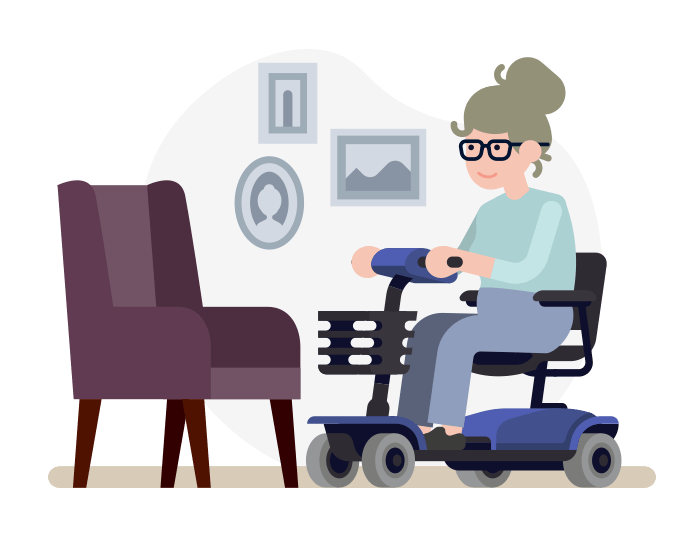
The right chair can also make transfers easier. Transfers simply mean moving from one seat to another, like from your scooter to your armchair. The most important things to consider are:
-
Seat height compared with your scooter seat
-
Armrests that help you push up safely
-
Clear space around the chair for positioning your scooter
-
Stable flooring so you can move confidently
These small details can make daily life feel much smoother.
The main types of chairs for limited mobility
Depending on your position, you have a range of chairs to choose from:
High seat chairs for elderly users
High seat chairs are slightly taller and firmer than standard armchairs. Because the seat is higher, your knees don’t bend as sharply when sitting, which makes it easier to stand.
These are a good option if you want a simple, non-powered chair that still feels like regular furniture but offers better support.
However, if standing up still feels difficult, a powered chair might be more helpful.
Riser recliner chairs
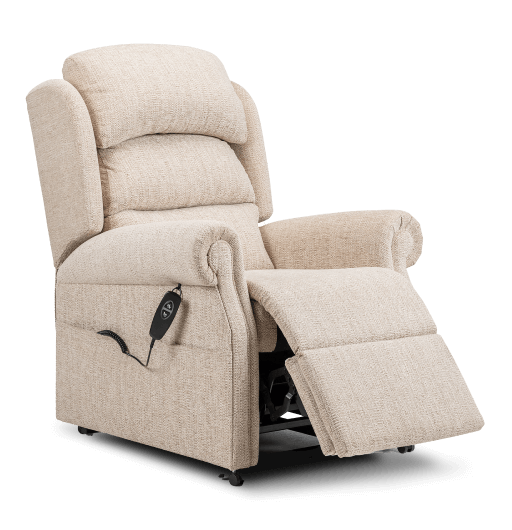
Riser recliner chairs are powered chairs that help lift you into a standing position. They also recline, allowing you to rest with your feet raised.
These chairs are often chosen by people who find it physically demanding to go from a seated position to standing from a standard chair.
-
Single motor chairs move the backrest and footrest together.
-
Dual motor chairs allow the backrest and footrest to move independently.
Dual motor chairs can offer more positioning flexibility, especially if you spend longer periods sitting.
Tilt in space chairs
Tilt in space chairs tilt the entire seat backwards rather than bending sharply at the hips. This helps keep your body supported in one position.
They’re often used when maintaining comfortable posture for longer periods is important.
If you’re considering this type of chair, it can be helpful to ask an Occupational Therapist or clinician for advice.
How to choose the best chair for standing up easily
When looking for the best chair for standing up easily, focus on practical features rather than complicated specifications. Here are the key factors to check:
-
Seat height — Not too low
-
Seat depth — Comfortable behind the knees
-
Firm cushioning — Supportive, not overly soft
-
Armrests — Strong enough to push up from
-
Stability — The chair should not move when you stand
Talk to the experts at Muick Sandy to learn more.
How to measure seat height
You can check your ideal seat height at home:
-
Sit with your feet flat on the floor.
-
Your knees should feel roughly level with your hips.
-
Measure from the floor to the back of your knee.
This measurement can help you compare chair heights.
If your current chair feels too low, even a small increase in height can make standing much easier.
Common mistakes when choosing mobility chairs
Many people choose chairs based on comfort alone, but support matters just as much. The most common mistakes are:
-
Choosing a chair that is too soft, making it harder to stand
-
Buying without checking seat height
-
Ignoring armrest support
-
Not thinking about room space and scooter positioning
-
Assuming the NHS will provide a chair
The goal is to find a chair that supports your independence and daily routine.
Can you get a mobility chair on the NHS?
In the UK, equipment and adaptations are sometimes assessed through health or social care services.
You might be referred to an Occupational Therapist (OT) who can assess your needs at home and suggest equipment that may help.
However, many riser recliner chairs are considered furniture rather than medical equipment. Because of this, they are usually purchased privately.
If you’re unsure where to start, your GP, local council or OT service may be able to advise you on available assessments and support.
How Muick Sandy can assist
Choosing the right chair means finding seating that helps you feel comfortable, stable and confident in your own home.
The best chairs for limited mobility focus on the basics: the right seat height, supportive armrests, stable design and comfort that helps you stand easily.
If you use a mobility scooter, thinking about transfers and chair positioning can also make daily routines much easier.
From a clinical perspective, small improvements in comfort and confidence can make a meaningful difference to independence and wellbeing.
With a Muick Sandy home demo, you can try a chair in your own home before deciding.
Chairs for limited mobility FAQs
What is a riser recliner chair?
A riser recliner chair is a powered chair that gently lifts you towards a standing position and reclines for comfort. It is designed to help people who find it difficult to stand up from low seating.
What is the best chair for standing up easily?
The best chair for standing up easily usually has the correct seat height, firm cushioning and supportive armrests. Many people choose riser recliner chairs or high seat chairs for extra support.
How high should a chair be to help you stand up?
A helpful guide is to choose a seat height where your feet rest flat on the floor and your knees feel roughly level with your hips. This position allows you to stand more comfortably.
What are mobility chairs UK customers commonly choose?
In the UK, many people choose high seat chairs or riser recliner chairs because they combine supportive seating with practical help when standing.