

Choosing a mobility scooter can feel like a big step. There’s a lot to think about, and it’s easy to feel unsure about where to start. This guide is here to make things simpler for you.
We’ll explain how to pick the right mobility scooter for you, so you can feel confident about choosing one that genuinely supports your life. Whether you want something for short trips, full days out or a mix of both, we offer practical guidance that helps you move forward with ease and freedom. Let’s go through the mobility scooter buying guide, step by step:
1. Start with how you want to use your mobility scooter
Before you look at features or specs, think about how you’ll use your mobility scooter day to day. This helps you narrow your choices quickly and confidently.
Will you mainly use it indoors, outdoors or a bit of both? Are you planning short trips to the shops, or full days out with family? Picture the places you’ll go. Is it smooth pavements, uneven paths, busy town centres or garden paths at home?
It also helps to think about how often you’ll use it. Every day? Weekends? Holidays abroad? As you imagine your routine, note what matters most to you. That might be comfort, storage, ease of transport, battery range or something else entirely. This gives you a clear starting point and helps you choose the best mobility scooter for you.
2. Know the different types of mobility scooter
Once you’re clear on how you’ll use your scooter, it’s easier to understand which type will suit you best. In the UK, most mobility scooters fall into three simple groups:
-
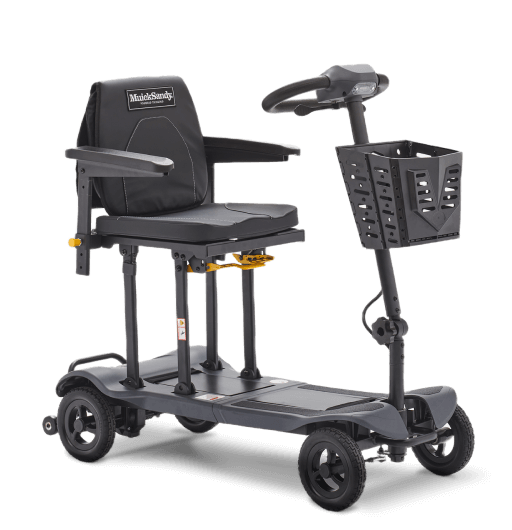
Travel or folding scooters — Lightweight and easy to lift. They fold or come apart quickly and fit into most car boots. Ideal for days out, holidays and short everyday trips.
-
Mid-size everyday scooters — A balance of comfort and portability. They give you more support than travel scooters but are still manageable to move and store.
-
Larger Class 3 scooters — Road-legal, with lights, indicators and longer battery range. Designed for longer journeys and mixed terrain.
Class 2 vs Class 3 mobility scooters (UK)
Class 2 scooters are designed for pavements and paths, with a top speed of 4mph. Class 3 scooters can be used on the road (up to 8mph) as well as pavements (4mph). Class 3 models include extra features like lights and mirrors. There’s no licence needed, just an understanding of where each type can be used safely.
3. Think about the comfort and fit of your mobility scooter
A mobility scooter should feel good the moment you sit on it. Comfort is what helps you feel relaxed, stable and in control.
Look at the seat first. Is the height right for you? Do you have enough width and cushioning to stay comfortable on longer trips? Notice the suspension too, as this affects how smooth the ride feels on pavements or uneven paths.
Check the armrests, legroom and how easily you can adjust the steering column. These small details make a big difference to how natural it feels to drive.
If you can, try one at home. Sitting on a scooter in your own space helps you sense whether the fit feels right for your body and your lifestyle.
4. Check how easy it is to lift, fold and store
It’s important to choose a scooter that fits smoothly into your daily routine. Think about how you’ll move it, fold it and store it when you’re not using it.
Can you lift it yourself, or will someone help you? If it folds, does it fold in a simple, stress-free way? Picture how it will fit into your car boot, hallway, cupboard or garage. A quick check of measurements can save a lot of hassle later.
If you plan to travel, imagine taking it on trains, buses or taxis. Will it be easy to manage when you’re out and about?
5. Don’t forget battery range and charging
Battery range plays a big part in how much freedom your scooter gives you. Most mobility scooters are designed to cover everyday trips comfortably, but ranges do vary. Think about the distance you usually travel and choose a range that supports that without worry.
Consider where you’ll charge it. Some scooters have removable batteries, which means you can charge them indoors without moving the whole scooter. Charging is usually straightforward and done overnight.
Your lifestyle matters too. Frequent hills, cold weather and heavier loads can slightly reduce range. Pick a scooter that gives you confidence to go where you want, when you want, with the freedom to live life your way.
What to look for in safety and support
Feeling safe and supported matters just as much as comfort. Look for simple features that help you feel secure on every trip, like bright lights, indicators on larger models, anti-tip wheels and responsive brakes. These are everyday tools that help you drive with confidence.
It’s also worth checking the warranty and what servicing looks like. Knowing your scooter is backed by clear, reliable care makes ownership much easier.
UK-based support is especially helpful. When guidance comes from people who understand your roads, weather and travel needs, everything feels more straightforward.
And remember, you don’t have to decide without trying one. A home trial lets you test how it feels in real life.
Our final checklist before you choose
Before you make your decision, it helps to pause and run through a few simple questions. These give you clarity and help confirm whether a scooter truly fits your life:
-
Where will I use it most?
-
Can I lift it, fold it and store it easily?
-
Do I feel comfortable and in control when I sit on it?
-
How far do I need to travel on one charge?
-
Can I try it at home first to make sure it feels right?
Still not sure? That’s what we’re here for. Get in touch to discuss your options with Muick Sandy.
Mobility scooter FAQs
What’s the difference between a Class 2 and Class 3 mobility scooter?
Class 2 scooters are for pavements and paths, with a top speed of 4mph. Class 3 scooters can go on the road up to 8mph and have features like lights and mirrors. Both can still be used on pavements at 4mph. No licence is needed.
Can I take a mobility scooter on public transport in the UK?
Many trains, buses and trams do allow mobility scooters, but rules vary by operator. Most require smaller, folding or lightweight models and may ask for a permit. It’s always best to check with the travel company before your journey.
How far can a mobility scooter go on one charge?
Ranges vary depending on the scooter and the battery. Many lightweight models cover everyday trips comfortably, while larger scooters can go much further. Hills, weather and weight can affect range, so choose one that matches your routine.
What’s the best scooter for indoor and outdoor use?
Mid-size scooters often offer the best balance. They’re compact enough for indoor spaces but stable enough for pavements and everyday outdoor use. A home demo helps you see how well a scooter handles both in real life.
Can I try a scooter at home before buying?
You can book a free home demo to see how a scooter feels in your own space. You can check comfort, storage, folding and driving all with no pressure or obligation.