


The good news is that holidays are absolutely possible with the right planning. People across the UK travel every year with scooters, both at home and overseas. The key is knowing what questions to ask and when to ask them.
This guide is here to talk you through it calmly and clearly. We’ll cover flying with a mobility scooter, travelling by train in the UK, using Eurostar, going by coach, and taking a scooter on a cruise. We’ll also explain battery rules, insurance, and how to plan ahead so there are no surprises.
Nothing here is about rushing or pushing you. It’s about helping you feel confident, prepared and in control, so you can focus on enjoying your holiday.
I want to take my mobility scooter on holiday, what do I need to do first?
Before booking anything, it helps to pause and look at the basics. Most travel issues can be avoided by checking a few key details early. This applies to all mobility scooter travel rules, whether you’re staying in the UK or going further afield. Things to check early include:
-
How you’re travelling, such as plane, train, cruise or coach
-
Scooter size, both folded and unfolded
-
Scooter weight
-
Battery type and capacity
-
Who you need to contact before booking
-
Allowing extra time for assistance and boarding
It also helps to have your scooter details written down, especially if you’ve spent time getting familiar with different designs and features beforehand. This usually includes the make, model and battery information. Having clear information to hand can make conversations with travel providers much easier.
Support is available through Muick Sandy’s help pages, and many people find reassurance in choosing from the wider mobility scooters collection when planning future trips.
Flying with a mobility scooter: what to know before you book
Flying tends to raise the most questions. That’s mainly because airline policies differ and battery safety is taken seriously. With preparation, flying with a mobility scooter is usually manageable and well supported.
Do airlines allow mobility scooters?
Most airlines do allow mobility scooters, including electric models. However, each airline sets its own rules. This is why flying with a mobility scooter always starts with checking directly with the airline before you book.
Advance notice is usually required. This gives the airline time to arrange assistance and confirm safe handling. Some ask for details during booking, while others request information later.
Many airlines also provide airport assistance. This can include support at check in, security and boarding. Letting them know early helps everything feel calmer on the day.
Mobility scooter battery airline regulations explained simply
Battery rules exist for safety reasons. They’re not there to make travel harder. Most scooters use one of two battery types. Lithium batteries or non spillable batteries such as sealed lead acid:
-
Lithium batteries — Measured in watt hours. This simply describes how much energy the battery holds. Airlines ask for this because higher capacity batteries carry more stored energy.
-
Non spillable batteries — Often approved for travel but still need to be declared.
Airlines might also ask whether the battery can be removed. Some require removable batteries to travel in the cabin, while others allow batteries to stay fitted.
This is why mobility scooter battery airline regulations always depend on the airline. Checking early avoids last minute stress.
What information airlines usually ask for
Most airlines request similar details. Having these ready can make things much easier. You’ll often be asked for:
-
Scooter dimensions folded and unfolded
-
Total weight including the battery
-
Battery type and capacity
-
Whether the battery can be removed
-
The make and model
This information helps airlines plan safe storage and handling.
Tips to protect your scooter when flying
A few simple steps can help protect your scooter during travel. Helpful preparation includes:
-
Taking clear photos before travel
-
Labelling the scooter with your contact details
-
Removing loose items such as baskets or mirrors
-
Keeping keys and chargers in your hand luggage
If there’s any damage on arrival, report it straight away at the airport so staff can guide you through next steps.
Taking a mobility scooter on trains in the UK
Train travel is a popular option for UK holidays. Taking a mobility scooter on trains in the UK is often possible, but rules vary by operator.
Are mobility scooters allowed on UK trains?
Many train companies do allow mobility scooters. Size and weight limits usually apply, and some operators require a permit.
Advance notice is strongly recommended. This allows staff to arrange ramps and assistance where needed.
Because rules differ, it’s always important to check directly with the train company you’re travelling with.
Why rules vary by train company
Train layouts vary across the network. Door widths, turning space and carriage design all affect what can be safely accommodated.
This is why one operator might allow a scooter that another does not.
What about Eurostar?
Eurostar has its own requirements. Mobility scooters are allowed, but size limits are strict and space is limited.
Charging scooters on board is not permitted. Advance contact is essential so staff can confirm suitability and assistance.
Travelling by coach or bus with a mobility scooter
Coach and bus travel can be less consistent. Policies vary widely between companies.
Some services can carry mobility scooters. Others may only accept manual wheelchairs. Scooters are not always treated the same way. Before booking, it’s important to check:
-
Whether scooters are accepted
-
Any size or weight limits
-
Storage arrangements during travel
Clear expectations help avoid disappointment, and many people do travel successfully with the right information.
Going on a cruise with a mobility scooter
Cruises offer a relaxed pace, but they do require careful planning if you’re bringing a scooter.
Most cruise lines ask for approval in advance. This usually includes scooter dimensions, weight and battery details. Cabin space and storage are also important to consider.
Charging rules vary by cruise line. Some specify where charging can take place to reduce risk.
Onboard repair options are limited, so bringing essential items is important. Early planning makes cruising far more comfortable.
Travel insurance and backup planning
Insurance and preparation matter just as much as transport.
Do I need special travel insurance?
Standard travel insurance doesn’t always cover mobility scooters. Some policies exclude them or limit protection. When choosing cover, look for:
-
Loss or damage protection
-
Use during flights or cruises
-
Breakdown or repair support
Knowing you’re covered adds peace of mind.
What to pack and plan for
A simple checklist can help. Useful items include:
-
Charger
-
Spare keys if available
-
Scooter manual
-
Rain cover
-
Emergency contact details
-
A basic backup plan
Preparation helps you feel confident wherever you go.
Is a travel mobility scooter right for holidays?
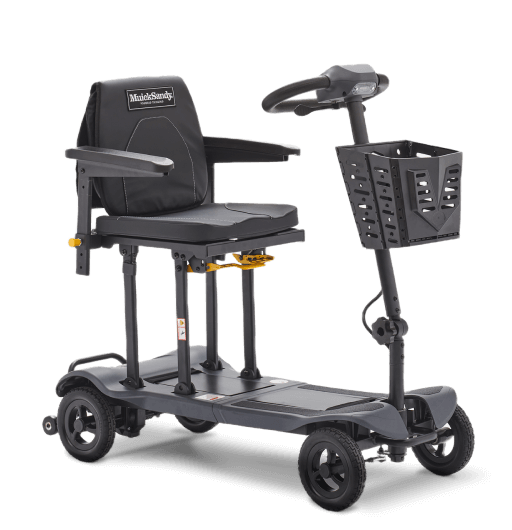
Many people choose a separate model designed for travel. Travel mobility scooters for holidays are often lighter, easier to lift and simpler to store.
Folding scooters and lightweight scooters can be easier to manage at airports, stations and hotels. This is why many people explore folding scooters or lightweight scooters alongside their everyday model.
It’s not about replacing what you already have. It’s about choosing the right option for the journeys you want to enjoy.
Travelling with confidence and peace of mind
Travelling with a mobility scooter does take planning, but it’s very achievable. With the right checks, clear information and enough time, holidays can feel enjoyable again.
Whether you’re flying, travelling by train in the UK, using Eurostar, joining a cruise or going by coach, preparation makes all the difference. Knowing the rules, understanding your scooter and planning ahead helps you stay confident and independent.
At Muick Sandy, we believe travel should feel empowering, not stressful. If you’d like friendly, no pressure advice, or want to try a travel scooter at home, we’re here to help.
FAQs
Can I take my mobility scooter on a plane?
In most cases, yes. Many airlines allow mobility scooters, but policies vary. You’ll need to provide details about your scooter and battery and contact the airline in advance.
What battery type is allowed on flights?
Both lithium and non spillable batteries are often allowed, but limits differ by airline. Airlines ask for details to manage safety. Always check directly with the airline.
Do UK trains allow mobility scooters?
Many train companies allow mobility scooters, but size and weight limits apply. Some require permits or advance notice. Checking with the operator is essential.
Can I take a mobility scooter on Eurostar?
Yes, but restrictions apply. Eurostar has strict size limits and requires advance contact. Charging on board is not allowed.
Do I need travel insurance for my mobility scooter?
Yes. Standard policies may not cover scooters. Look for insurance that includes loss, damage and use during travel.
What happens if my scooter is damaged while travelling?
Report damage as soon as possible to the airline, train company or cruise line. Photos taken before travel can help. Travel insurance may support a claim.