


Travelling with a scooter can feel overwhelming at first. Different airlines, train operators and holiday destinations often have their own rules, especially when it comes to batteries, size limits and accessibility support.
However, travelling with a mobility scooter is absolutely possible with the right preparation.
This guide explains what to check before you leave, how flying with a mobility scooter works and what to know before travelling abroad.
What to check before travelling with a mobility scooter
Before booking your trip, make sure you know:
-
Your scooter’s weight and dimensions
-
Your battery type and watt-hour rating
-
The policy of the airline or train operator you’re travelling with
-
Whether assistance needs to be booked in advance
-
Local accessibility and charging options
-
Whether insurance is required at your destination
It’s also important to understand whether your scooter is Class 2 or Class 3.
In the UK, Class 2 scooters are mainly designed for pavements and usually travel at up to 4mph. Class 3 scooters can also be used on roads and travel at speeds of up to 8mph.
Essential travel checklist
Before travelling, make sure you pack or save copies of:
-
Your charger
-
Spare key
-
User manual
-
Insurance documents
-
Battery specifications
-
Airline approval paperwork
-
Emergency contact numbers
It’s also worth taking photos of your scooter before travelling, especially if you’re flying. This can help if you ever need to report damage during transport.
Flying with a mobility scooter
Most airlines allow mobility scooters, but you’ll usually need to provide important information before travelling.
Airlines often ask for:
-
Make and model
-
Weight and dimensions
-
Battery type
-
Battery watt-hour rating
-
Whether the battery can be removed
It’s always best to arrive at the airport early and arrange assistance in advance wherever possible.
Your scooter will typically travel in the aircraft hold, although removable batteries may sometimes need to travel separately in the cabin depending on airline’s policy.
Airline rules on mobility scooter batteries
Battery rules are one of the biggest concerns when flying with a mobility scooter.
Most travel scooters use either lithium or non-lithium batteries. Airlines pay particular attention to lithium batteries because they are regulated for air travel.
You may be asked for the battery’s watt-hour rating. This measures battery capacity and is normally listed on the battery label or in the scooter manual.
Before flying, always:
-
Check your airline’s battery policy
-
Confirm whether batteries need to be removed
-
Protect battery terminals if required
-
Keep battery information with you while travelling
There is no single universal standard for airline approved mobility scooters, so it’s always important to check directly with your airline before travelling.
What happens if an airline damages your mobility scooter?
If your scooter is damaged during travel:
-
Report it before leaving the airport
-
Take photographs straight away
-
Keep all baggage and assistance paperwork
-
Contact your insurer if needed
Checking your insurance before travelling can also help reduce stress if damage happens unexpectedly.
Travelling abroad with a mobility scooter
Travelling abroad with a mobility scooter often requires extra planning because rules can vary between countries, resorts and transport providers.
Muick Sandy recently warned travellers that some popular European destinations are becoming stricter around mobility scooter misuse.
In Tenerife, reports have highlighted fines and scooter seizures linked to dangerous use. In Benidorm, some rental companies may ask for proof of disability or public liability insurance.
France and Italy can also have different rules around speed limits, pedestrian areas and insurance requirements.
The most important thing is not to assume rules are the same everywhere. Always check local guidance before you travel.
Why local mobility scooter laws are important abroad
Local regulations may include rules around:
-
Pavement speed limits
-
Restricted access zones
-
Insurance requirements
-
Proof of disability
-
Parking restrictions
Muick Sandy research found that 38% of Brits wrongly believe mobility scooters are banned from pavements, which shows how confusing regulations can already feel before travelling abroad.
Should you take your scooter abroad or hire one locally?
Both options have advantages depending on the type of trip you’re planning.
|
Take your own scooter |
Hire locally |
|
Familiar and comfortable |
Less transport hassle |
|
Reliable battery and controls |
Useful for short trips |
|
May involve airline restrictions |
Quality can vary |
|
Requires transport planning |
Availability may be limited |
If you travel regularly, investing in one of Muick Sandy’s lightweight or folding mobility scooters can make journeys much simpler and easier to manage.
Taking a mobility scooter on trains, buses and ferries
Many public transport services allow mobility scooters, but restrictions can vary between operators.
Train operators may have limits around:
-
Scooter size
-
Weight
-
Turning circle
-
Wheelchair space compatibility
Some train companies may also require pre-approval or assistance booking before travel.
Buses and ferries can have different accessibility policies too, so it’s always best to check before your journey.
Can mobility scooters go on public transport?
Yes, many mobility scooters can be used on public transport, although acceptance depends on the transport provider.
Before travelling, ask:
-
Is my scooter allowed?
-
Do I need assistance?
-
Are there size or weight limits?
-
Is pre-booking required?
Compact Class 2 scooters are often easier to accommodate than larger Class 3 models.
Choosing the best mobility scooter for travel
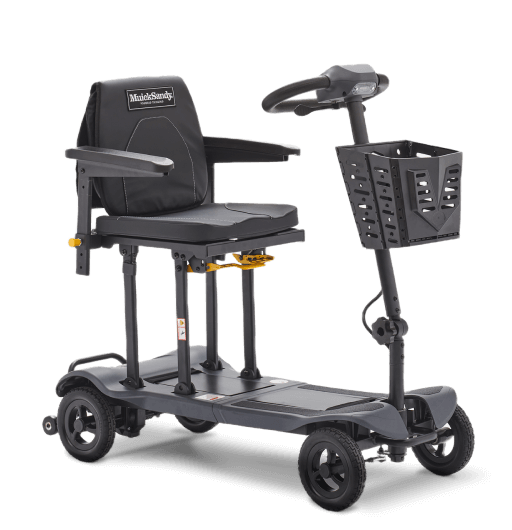
The best mobility scooter for travel is usually lightweight, compact and easy to transport.
Useful features include:
-
Folding frames
-
Lightweight design
-
Removable batteries
-
Compact storage
-
Easy disassembly
These features can make flights, cruises, train journeys and day trips much easier to manage.
What makes an airline approved mobility scooter?
There is no official airline-approved standard for mobility scooters.
However, airlines generally prefer scooters that:
-
Have removable batteries
-
Meet battery regulations
-
Fit within handling limits
-
Are easy to store safely
Always confirm approval directly with your airline before booking or travelling.
Insurance, safety and travel preparation tips
Before travelling, check whether your insurance covers:
-
Damage
-
Theft
-
Breakdown
-
Overseas use
-
Airline handling damage
You should also:
-
Check your charger works abroad
-
Pack the correct plug adapter
-
Keep copies of important documents
-
Service your scooter before travelling
Common mistakes travellers make with mobility scooters
Some of the most common travel mistakes include:
-
Not notifying airlines early enough
-
Forgetting battery paperwork
-
Assuming rules are the same abroad
-
Arriving late for assistance services
Planning ahead helps avoid most travel problems and can make the whole journey feel much calmer and more manageable.
Ready to travel?
Travelling with a scooter can feel complicated at first, but good preparation makes a huge difference.
Whether you’re flying with a mobility scooter, travelling abroad or using public transport in the UK, checking the rules early and keeping your scooter information close to hand can help everything run much more smoothly.
The right travel-friendly scooter can also make journeys more comfortable, flexible and less stressful overall.
Muick Sandy’s range of lightweight and folding mobility scooters is designed to support safer, simpler travel wherever you’re heading. If you’d like help finding the right option, we’re here to help. Book a demo and see how we can support your next journey.
Travelling with a Scooter FAQs
Can I take a mobility scooter on a plane?
Yes. Most airlines allow mobility scooters, but you’ll usually need to provide information about the scooter size, weight and battery before travelling. It’s best to contact the airline as early as possible and arrange assistance in advance to help your journey run more smoothly.
What battery size is allowed on airlines?
This depends on the airline and the type of battery your scooter uses. Lithium batteries are normally assessed using watt-hours, and different airlines may have different limits. Always check directly with your airline before travelling and keep your battery information available during your journey.
Do I need insurance to use a mobility scooter abroad?
Some destinations and mobility scooter hire companies may ask for insurance, particularly public liability cover. Requirements can vary between countries, so it’s important to check local rules before you travel. Travel insurance that covers your scooter can also provide extra reassurance while you’re away.
Can mobility scooters go on trains?
Yes, many train operators allow mobility scooters, although restrictions may apply depending on the scooter’s size, weight and turning circle. Some train companies also ask passengers to book assistance in advance, so it’s worth checking before travelling to avoid unexpected problems on the day.
Are folding mobility scooters better for travel?
Folding mobility scooters are often easier to transport and store, especially for flights, cruises and holidays. Their lightweight design can make them simpler to lift into vehicles and easier to manage in smaller spaces, which is why many people prefer them for regular travel.
Can I charge my mobility scooter abroad?
Yes, although you may need a travel plug adapter depending on your destination. It’s also important to check voltage compatibility before travelling, especially outside Europe. Taking your charger and checking charging arrangements at your accommodation can help avoid unnecessary stress during your trip.
What is the difference between a Class 2 and Class 3 mobility scooter?
Class 2 mobility scooters are mainly designed for pavements and usually travel at speeds of up to 4mph. Class 3 scooters can also be used on roads and travel at speeds of up to 8mph. Class 3 models are generally larger and may have additional legal requirements.