

At a glance
-
Doctors recommend rise-and-recline chairs, but they must be custom-fitted to your measurements to support proper posture.
-
Sitting at an angle of 110 to 130 degrees decompresses the spine and helps improve your circulation.
-
Avoid overly soft commercial recliners, as they lack proper lumbar support and can cause spinal strain.
-
Regularly sleeping in a recliner can cause joint stiffness, though it can benefit those with severe acid reflux.
-
You may qualify for a free chair loan through NHS occupational therapy assessments or receive VAT relief.
So, do doctors recommend recliners for long-term comfort and posture support?
They can do, especially when a rise-and-recline chair is properly fitted to the person using it. The right chair should support your body, help you sit comfortably and make it easier to stand when needed.
In this guide, we look at the possible benefits of supportive seating, what to avoid when choosing a chair and how professional advice can help you find the right fit.
Do doctors recommend recliners?
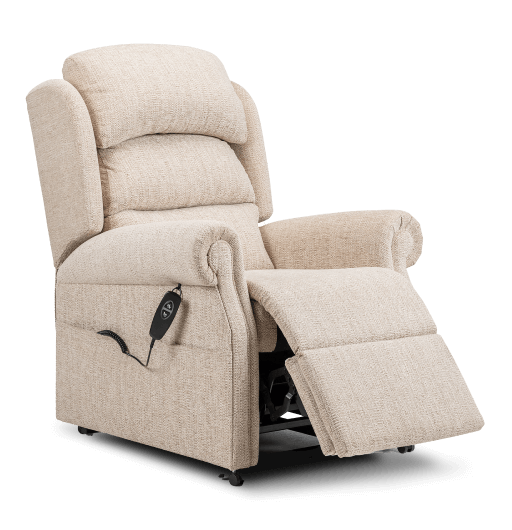
Yes, doctors and occupational therapists frequently recommend rise and recline chairs to help you maintain your independence, manage chronic pain, and sit comfortably. These orthopaedic recliners are highly effective clinical tools when they're custom-fitted to your unique measurements, rather than standard, mass-produced models.
By adjusting the seating angle, these specialised chairs help redistribute your body weight, relieve pressure on your joints, and make standing up completely effortless.
Medical approval for these chairs depends heavily on whether they're personalised to your height, weight, and specific mobility needs. When a chair doesn't fit your body properly, it can actually make your posture worse. But when properly fitted, a quality recliner can significantly improve your daily well-being.
Professor Stephen Black, Consultant Vascular Surgeon, explains:
"For people with reduced mobility or chronic venous conditions, prolonged sitting in an unsuitable chair can contribute to discomfort, poor posture and swelling in the lower limbs. A well-fitted rise and recline chair can encourage better positioning, improve comfort and make it easier to change position throughout the day. The key is ensuring the chair is correctly fitted to the individual rather than choosing a standard off-the-shelf model."
How orthopaedic recliners can support your physical health
Using a clinically approved rise-and-recliner offers several significant physiological benefits that can transform how you feel throughout the day. These chairs are engineered to support your body's natural alignment while improving key bodily functions.
Here are just a few of the benefits:
-
Optimal spinal alignment: By supporting the natural curves of your back, these chairs keep your head, neck, and lower back in a neutral spine position, which reduces tension in your muscles.
-
Improved fluid circulation: Elevating your legs so they rest above the level of your heart helps manage painful swelling, known as oedema, in your lower limbs.
-
Reduced DVT risk in chairs: Regular movement and leg elevation discourage blood pooling in your lower legs, which promotes healthy lower-limb comfort and support during restful periods
-
Pressure ulcer prevention: Advanced rise-and-recline designs offer effective shear reduction, which means the fabric and cushions slide smoothly with your body to prevent skin friction and painful pressure sores.
-
Effortless standing transitions: The built-in riser function gently tilts and lifts you to your feet, which takes the strain off weak knees and hips while greatly reducing your risk of falls.
You might also find that resting in a zero-gravity position, where your thighs and legs are elevated slightly above your heart, brings immediate relief to tired joints. It helps you relax completely, making it easier to read, watch television, or simply enjoy a quiet afternoon.
Professor Black notes that leg elevation can also play an important role in day-to-day comfort for some patients with venous disease:
"Elevating the legs above heart level can help reduce venous pressure and manage swelling for many people with chronic venous insufficiency. While a recliner is not a treatment for vascular disease, appropriate positioning can be a valuable part of managing symptoms alongside medical advice."
Why very soft recliners may not support your back well
It's incredibly easy to fall into the showroom trap when shopping for a new armchair. A chair that feels like a soft, fluffy cloud for five minutes can actually cause serious discomfort over hours of daily use.
Extremely soft, plush recliners often cause what experts call the "worn-out hammock" effect. Without firm resistance under your seat, your pelvis tilts backward, forcing your lower spine to collapse into an unhealthy C-curve. Over time, this poor posture strains your muscles and pinches your spinal discs.
To help you understand the difference, here’s how standard commercial chairs compare to supportive, custom-fitted models:
|
Feature |
Standard commercial recliner |
Custom-fitted riser recliner |
|
Lumbar support |
Often very soft, leading to slumping |
Firm, targeted support for the lower back |
|
Sizing options |
One-size-fits-all, causing posture strain |
Custom seat depth, height, and width |
|
Standing assistance |
None, requires manual effort to stand |
Power-riser motor for safe, gentle lifts |
|
Skin protection |
Standard fabrics that can cause friction |
Specialised padding for pressure reduction |
Mobility experts use a professional framework called SHAPE to complete a thorough seating assessment:
-
Size: Measuring your specific leg length, hip width, and forearm height.
-
Health: Assessing your medical history, joint pain, and circulation needs.
-
Action: Looking at how you sit, tilt, and rise from a chair.
-
Pressure: Identifying areas where you need extra padding to avoid skin irritation.
-
Environment: Checking the space available in your living room.
Making sure the seat has the correct depth and height is essential to prevent your posture from deteriorating over time.
According to Professor Black, comfort should never come at the expense of support:
"Many people choose the softest chair in the showroom because it feels comfortable initially. In practice, maintaining good posture over several hours is far more important than those first few minutes of comfort. A supportive chair that fits your body properly is usually the better long-term choice."
Is sleeping in a recliner chair bad for you?
An occasional nap in a recliner may be comfortable, but regularly sleeping overnight in one may not suit everyone.
If your hips and knees stay bent for long periods, you may wake feeling stiff or uncomfortable.
Sleeping in a seated or semi-reclined position may also affect how comfortable and settled you feel overnight.
However, there are some very helpful medical exceptions to this rule. If you struggle with severe acid reflux, sleeping at a gentle incline uses gravity to prevent stomach acid from rising. This provides excellent relief from gastro-oesophageal reflux disease (GORD) and can make breathing much easier if you have respiratory issues.
If you do need to sleep in your chair, you can make it safer and more supportive. Placing a dual-motor rise-and-recliner in your bedroom allows you to sleep at a supported angle close to your partner. You can also use custom supportive foam rolls under your neck or knees to keep your joints in a relaxed, neutral position.
How to get a riser recliner chair on the NHS
If you or a loved one has significant difficulty sitting down or standing up safely, you might be eligible to receive a supportive chair through public funding. The process requires a few formal steps to ensure the equipment meets your precise physical needs.
-
Request a GP referral: Speak to your doctor or local social services department to ask for a referral to an Occupational Therapist (OT).
-
Complete the Occupational Therapist assessment: The OT will visit your home to conduct a full clinical assessment of your daily environment, measuring your physical capabilities and identifying any safety hazards.
-
Receive your equipment loan: If the assessment confirms that a rise-and-recline chair is needed, your local authority may arrange a long-term loan of a suitable chair through its community equipment service. In many cases, this is provided at no cost to you.
-
Explore alternative financial support: If you don't qualify for a direct loan, you can apply for a Disabled Facilities Grant (DFG) to help cover the costs. You can also take advantage of UK VAT relief, which allows you to purchase a supportive chair without paying VAT if you live with a chronic illness or disability.
Find the right supportive fit
Doctors and occupational therapists may recommend rise-and-recline chairs when they can help with comfort, posture or standing.
The most important thing is fit.
A chair should suit your body, give you the right level of support and feel comfortable over longer periods, not just for the first few minutes.
If you’re unsure what would suit you best, speak to your GP, occupational therapist or another qualified professional for advice.
If you'd like to explore how a custom-fitted chair can bring comfort back to your living room, please contact our friendly team at Muick Sandy today. We're always here to help with a relaxed, no-pressure conversation about your options.
Medical recommendations for recliner FAQs
Are recliners good for your back according to the NHS?
Yes, NHS guidelines support using rise-and-recline chairs if you have mobility needs, provided they're correctly sized. They help reduce pressure on your spine and make sitting and standing safe and effortless.
Can I get a riser recliner chair on the NHS?
You can receive one on a long-term loan through your local authority or Community Equipment Service if an Occupational Therapist (OT) assessment determines it's necessary for your safety and independence.
Is sleeping in a recliner chair bad for you?
While a short nap is fine, sleeping overnight in a recliner regularly can cause tight hips and restrict movement. We recommend using a proper bed for overnight sleep, or a specialised dual-motor recliner that can lie completely flat if bed access is difficult.
Do chiropractors and osteopaths recommend recliners?
They do recommend them, but only if they offer firm lumbar support and you adjust them to a 110-to-130-degree angle to relieve spinal load. They advise against soft, bucket-style recliners that make you slump.