

At a glance
-
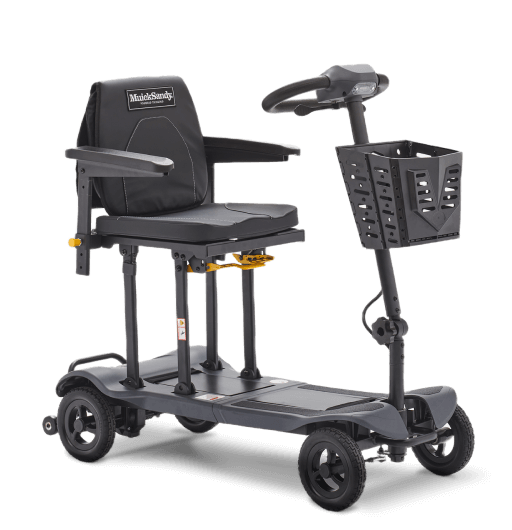
Mobility scooters use handlebars, known as a tiller, and are usually best suited to outdoor journeys.
-
Electric wheelchairs use a joystick and can be easier to use in smaller indoor spaces.
-
Class 3 mobility scooters must be registered with the DVLA. Class 2 scooters do not need to be registered.
-
NHS Wheelchair Services may provide wheelchairs to people who meet the criteria, but they do not fund mobility scooters.
-
Eligible customers may be able to buy a mobility scooter or electric wheelchair without paying VAT.
Regaining your freedom and spending more time outdoors can make a real difference to everyday life. If longer walks are becoming difficult, choosing between a mobility scooter and an electric wheelchair can help you stay independent and keep doing the things you enjoy.
This guide will help you understand the practical differences so you can make a choice that brings joy back to your days.
Your mobility needs
The main difference between a mobility scooter and an electric wheelchair lies in how they steer and where they perform best.
Mobility scooters use bicycle-style handlebars, known as a tiller, and are designed for outdoor independence over longer distances.
Electric wheelchairs (or ‘powerchairs’) are controlled by a simple joystick and excel at navigating tight indoor spaces.
Your choice depends on your physical dexterity, where you want to travel, and how you prefer to steer. It's a positive step towards reclaiming your daily freedom and enjoying life on your own terms.
Think about your typical day. If you want to pop down to the high street or explore park pathways, a scooter offers wonderful stability. But if you need something to help you move around your kitchen, a powerchair might suit you better.
Tiller or joystick: which feels more comfortable?
Steering your mobility companion should feel completely natural. The way you steer can make a real difference to your posture, comfort and energy levels.
|
Feature |
Mobility scooter (Tiller) |
Electric wheelchair (Joystick) |
|
Control style |
Two-handed bicycle-style handlebars (tiller) |
Small, highly sensitive single-finger joystick |
|
How it’s operated |
Usually requires both hands |
Minimal arm movement and light finger pressure |
|
Arm position |
Arms held forward towards the tiller |
Relaxed posture with arms resting on armrests |
|
Turning circle |
Wider turning circle |
Tight turning circle |
|
Best suited to |
Open spaces and outdoor journeys |
Indoor use and smaller spaces |
To steer a mobility scooter, you need to keep both hands on the tiller. You will also need enough grip and upper-body movement to operate the controls safely.
Some people may find that holding their arms forward becomes tiring on longer journeys. This will depend on your posture, strength and the scooter’s seating position.
A folding electric wheelchair uses a joystick instead. You can usually rest your arm on the armrest and control the chair with small hand or finger movements.
This can make a powerchair easier to use if you have limited grip, arm movement or upper-body strength.
Indoor use or outdoor trips?
Where you plan to use your scooter or electric wheelchair is one of the most important things to consider.
Using it at home
An electric wheelchair is often better suited to indoor spaces.
Its compact shape and tight turning circle can make it easier to move through doorways, turn in a kitchen or travel along narrow hallways.
Some electric wheelchairs can also be used outdoors, although their range and suitability will vary by model.
Getting out and about
A mobility scooter is usually designed with outdoor journeys in mind.
Four-wheel models can provide good stability on pavements and firm outdoor paths. Many scooters also offer a longer range, giving you more freedom to visit friends, go shopping or enjoy a day out.
Smaller folding mobility scooters can be easier to transport in a car boot. Larger models may provide more comfort and stability over longer distances.
Always check the manufacturer’s guidance before using a scooter on gravel, slopes or uneven ground.
Mobility scooter and electric wheelchair rules in the UK
Using your mobility device on public transport or roads means staying up to date with UK rules. These laws keep you safe while helping you travel with peace of mind.
-
Class 2 vs Class 3 mobility scooter UK rules: Class 2 scooters are designed for pavements with a 4 mph limit, while Class 3 scooters can travel up to 8 mph and are allowed on roads.
-
DVLA registration requirements: You don't need to register a Class 2 pavement scooter or a standard electric wheelchair. Class 3 road-going scooters must be registered with the DVLA, which is free.
-
Public transport access: Under the CPT Mobility Scooter Code of Practice, Class 3 scooters are generally banned on buses. Class 2 scooters are permitted on many buses, but you must obtain a specific permit and the scooter must meet strict size limits.
-
Train and air travel: Electric wheelchairs are widely accepted on trains and aeroplanes.
NHS support and private purchase
Finding the right financial support can make a huge difference when securing your independence. In the UK, funding pathways for scooters and powerchairs are quite distinct, so it helps to know your options early on.
NHS Wheelchair Services focus entirely on meeting clinical, everyday needs. Because of this, they don't supply or fund mobility scooters under any circumstances. They only provide manual or electric wheelchairs for those who meet their strict criteria.
If you want to explore other options, you can ask for an NHS Personal Wheelchair Budget. This lets you use NHS funding as a contribution towards a more specialised private purchase.
If you decide to buy privately, you can take advantage of excellent tax savings. This is because you don't have to pay VAT on wheelchairs or mobility scooters that are designed solely for use by a disabled person. To claim this 0% rate, you simply fill out a basic self-declaration form at the point of purchase. You don't need a Blue Badge or a doctor's note to qualify, making the process wonderfully simple.
Ready to rediscover your independence?
Choosing between a mobility scooter and an electric wheelchair comes down to where you want to go and how you prefer to steer. If you need tight indoor turning circles and joystick control, an electric wheelchair is an excellent choice.
If you want outdoor stability, simple controls, and the freedom to travel further on pavements, a lightweight folding mobility scooter is your perfect match. Take your time, consider your daily routine, and choose the option that makes you feel most confident.
Explore our lightweight mobility scooters today, or contact our friendly team for calm, honest advice.
Mobility scooters and electric wheelchairs FAQs
Do I need a driving licence to use an electric wheelchair or mobility scooter in the UK?
No. You do not need a driving licence to use a mobility scooter or electric wheelchair.
A Class 3 mobility scooter must be registered with the DVLA. You must also be aged 14 or over to drive one.
Can I get a mobility scooter or electric wheelchair through the Motability Scheme?
You may be able to lease a mobility scooter or powerchair through the Motability Scheme if you receive an eligible mobility allowance.
The amount and length of your award may affect whether you qualify.
Do I need insurance for a mobility scooter in the UK?
Mobility scooter insurance is not usually a legal requirement.
However, it can provide useful cover for theft, accidental damage and third-party claims. Check the policy carefully so you know what is and is not included.
Is a folding electric wheelchair better than a folding mobility scooter?
It depends on how and where you plan to use it.
A folding electric wheelchair may be easier to steer indoors and may require less upper-body movement. A folding mobility scooter may be better suited to outdoor trips and longer pavement journeys.
Compare the weight, folded size, range, seating and controls before choosing.
Can I take a mobility scooter into shops?
Many shops allow mobility scooters, but access can depend on the width of the aisles, available space and the size of your scooter.
Smaller scooters are often easier to use in shops. It is always worth checking access before you visit somewhere new.