

Looking for an electric mobility scooter but don’t know where to start? Don’t worry, it’s completely normal. Especially if you’re new to scooters or helping a loved one.
There are so many different options out there, and finding the right fit for comfort and independence can feel overwhelming. So join us as we bring everything together in this guide and help you explore the best electric mobility scooters for everyday life in the UK.
What is an electric mobility scooter?
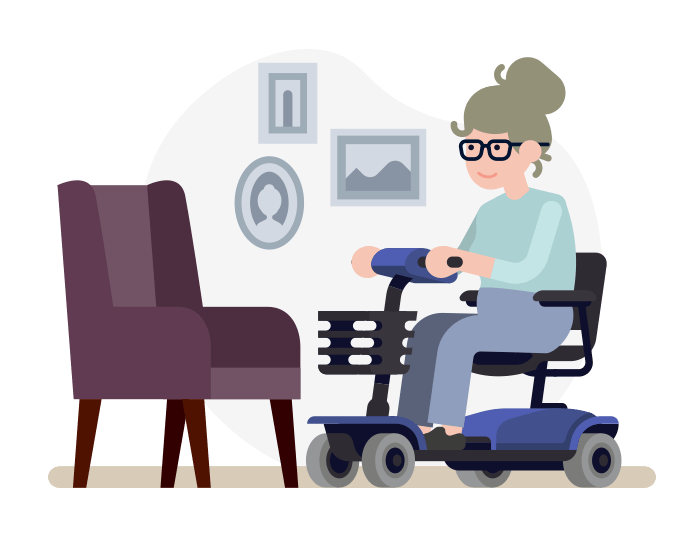
An electric mobility scooter is a battery-powered vehicle designed to help you travel more comfortably when walking longer distances becomes difficult.
Unlike a wheelchair or powered chair, you sit upright and steer using a simple handlebar, known as a tiller, which is easy to control at your own pace.
From shopping trips and family visits to days out, appointments and outdoor adventures, lots of people use electric mobility scooters for everyday life in the UK.
Here at Muick Sandy, we want to help make the day-to-day feel easier. Our mobility scooters are crafted in the UK and built to give you more independence, confidence and freedom to live life your way.
What types of electric mobility scooter are there?
Electric mobility scooters come in a few different styles, each designed for different journeys, lifestyles and levels of comfort. Understanding the types can help you choose something that feels right for your needs, whether that’s getting around town, visiting family or enjoying outdoor paths and parks.
The main categories of electric mobility scooter include:
Lightweight scooters
Lightweight scooters are designed to be as easy as possible to lift, manoeuvre and store. They’re ideal if you regularly take your scooter in and out of a car boot or prefer something light and nimble on pavements.
-
These scooters suit short to medium trips, errands and gentle days out, offering easy handling and everyday practicality.
Folding scooters
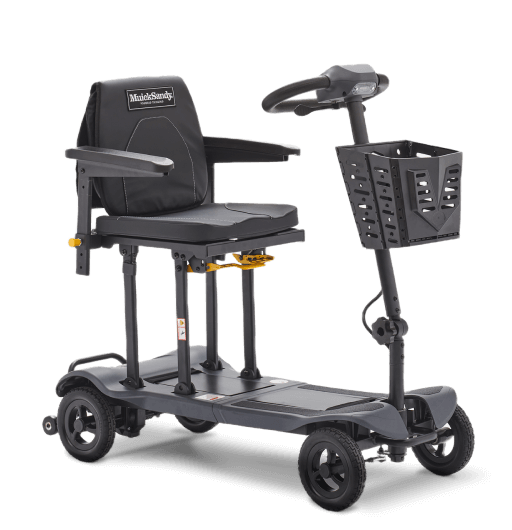
Folding scooters are perfect if you want something compact and quick to store. They fold down in seconds, making them great for car boots, public transport and holidays.
-
This type of scooter is ideal for anyone who values portability, small storage spaces or the freedom to travel without lifting separate parts.
Pavement (Class 2) scooters
With a top speed of 4mph to help you stay safe around others, Class 2 scooters are designed for pavements and pedestrian areas. They suit everyday errands, local travel and short to medium journeys.
-
Class 2 scooters are a good choice if you don’t need to go on the road and mostly stick to pavements, shops and appointments.
Road-legal (Class 3) scooters
Class 3 scooters can be used on the road at up to 8mph and include extra safety features like indicators, lights and mirrors. They’re best for longer distances, mixed terrain or more open routes.
-
If you regularly travel further than walking distance, a road-legal scooter may offer the confidence, power and stability you need.
All-terrain and outdoor models
Outdoor-focused scooters are designed for parks, countryside paths and uneven ground. With larger wheels, stronger suspension and better ground clearance, they help you stay steady across a range of surfaces.
-
These scooters are ideal if you want to prepare for things like gentle hills, coastal paths or rural walks and want more comfort on varied terrain.
How to choose the best electric mobility scooter for your lifestyle
Choosing an electric mobility scooter is all about finding what feels right for your everyday life. A good place to start is thinking about where you’ll use it most, what you need it to do and how you’d like it to feel.
If you’re wondering how to choose a mobility scooter, consider:
Where and how you’ll use your scooter
Think about your typical day. Will you mostly travel on pavements, visit local shops or take gentle trips through parks? If so, a pavement or folding scooter may work well.
If you’re planning longer journeys, steeper gradients or more varied surfaces, a road-legal or all-terrain model might give you the confidence and comfort you need.
It’s also worth thinking about how you’ll store your scooter at home, fitting it in your car boot and whether you use public transport.
Mobility scooter features that matter most
A few key features can make a big difference to your comfort and confidence when choosing a mobility scooter.
-
Range and battery life. Choose a range that matches your typical outings. Longer days out or countryside trips may need a higher-capacity battery.
-
Comfort and seating. Look for padded seats, adjustable armrests and a tiller that sets to your natural posture.
-
Suspension and tyres. These help smooth out bumps and uneven surfaces, especially outdoors.
-
Portability. Lightweight or folding designs are ideal if you need to lift your scooter regularly or travel by car.
-
Safety features. Good lighting, reflectors, brakes and visibility all add reassurance.
Budget and value
Electric mobility scooters in the UK vary in price depending on size, range and features. Rather than focusing only on cost, think about long-term value, including aftercare, warranty and ongoing support.
At Muick Sandy, all of our scooters are designed with reliability in mind and backed by our friendly UK-based service with guidance whenever you need it.
Best electric mobility scooters in the UK for 2026
With so many electric mobility scooters on the market, it helps to understand which models suit different lifestyles. From lightweight travel scooters to larger, road-ready models, we’ve put together a quick UK mobility scooter buying guide to give you a head start.
Best lightweight mobility scooters
Lightweight scooters are ideal if you need something easy to lift, steer and store. Our GoLite M-1 and M-2 scooters both fit this category.
-
The M-1 offers excellent everyday comfort, supportive seating and an impressive range for longer days out, while still dismantling into five manageable pieces.
-
The M-2 is one of the best lightweight mobility scooters for shorter local trips, offering simple handling and practical portability.
These scooters work well for pavements, shops, appointments and gentle days out.
Best folding mobility scooters for car-boot travel
If you’re searching for the best portable mobility scooter in 2026, a folding scooter can make travel much easier.
-
Our ProFold F-1 and F-3 models are perfect folding mobility scooters for a car boot, public transport and holiday use. And our F-1 Carbon with its patented Step2Fold system is ideal if you want something compact, lightweight and easy to take wherever you go.
Best all-terrain or outdoor scooters
If you’d like to take your scooter on countryside paths, parks or uneven surfaces, an outdoor-focused scooter may offer the extra comfort you need. Scooters with larger wheels, strong suspension and good ground clearance help keep you steady across mixed terrain.
All-terrain mobility scooters are designed for stability, confidence and comfort when your journeys take you beyond smooth pavements.
Best road-legal mobility scooters
Road-legal (Class 3) scooters are suited to longer distances and more open routes. They travel up to 8mph on the road and include features like lights, indicators and mirrors.
Look out for higher mobility scooter battery range and power to support extended journeys while still remaining comfortable and reassuring to drive.
No matter which type of mobility scooter you’re considering, it’s really important to think about how it fits into your daily routine.
What to check before you buy an electric mobility scooter
Before choosing a scooter, you need to make sure it’s the right fit for your everyday life. A few things to check when comparing electric mobility scooters in the UK include:
-
Comfort and seating. Make sure the seat feels supportive and that you can reach the controls without leaning or stretching.
-
Handling and stability. Try turning in a small space and check that the scooter feels steady and easy to steer at slow speeds.
-
Boot fit and lifting. If you use a car, test how the scooter folds or dismantles and whether the heaviest part feels manageable for you or a family member.
-
Battery range. Whether it’s local shops, longer days out or mixed outdoor routes, choose a range that matches your normal outings.
-
Home storage. Check where the scooter will live, how easily it can be charged and whether it fits through doorways and hallways.
-
Aftercare and support. Look at warranty, servicing options and the type of help available if something goes wrong. Knowing support is there adds real peace of mind.
If you’re still deciding, why not try a mobility scooter at home with a free home demonstration. This is one of the easiest ways to compare the best electric mobility scooters and see what truly feels right for you.
Staying safe and confident on the move
Feeling safe on your scooter is just as important as feeling comfortable. A few simple habits can help you travel confidently on pavements, paths and if your scooter is Class 3, on the road.
✔ Know your scooter class
-
Class 2 scooters are for pavements and have a top speed of 4mph.
-
Class 3 scooters can go on the road at up to 8mph and need features like lights, mirrors and indicators.
✔ Use pavements thoughtfully
Keep your speed slow around others, take your time at junctions and always give way to people walking.
✔ Check your visibility
Good lighting, reflectors and mirrors help you stay seen in all weather conditions, especially in winter or early evenings.
✔ Be mindful of surfaces
Wet leaves, gravel, steep kerbs and uneven ground can affect stability. Choosing a scooter with suitable tyres or suspension can help you feel more secure.
With a little practice, these small steps soon become second nature, giving you greater confidence wherever your electric mobility scooter takes you.
Looking after your electric mobility scooter
Regular care helps your scooter stay reliable, comfortable and ready for everyday use. Even a few little things can make a big difference.
-
Charge regularly. Top up the battery after each trip and avoid letting it go completely flat. This helps maintain a steady range for daily journeys.
-
Store it safely. Keep your scooter somewhere dry and sheltered, especially in winter, to protect the battery and electronics from cold or damp.
-
Check key parts. Look over tyres, lights and brakes every so often so you can spot anything unusual early.
-
Plan routine servicing. Regular maintenance helps keep your scooter running smoothly and gives you long-term peace of mind.
-
Reach out for help when you need it. If something doesn’t feel right, our friendly UK-based team is always here to help you stay confident on the move.
Find the scooter that feels right for you
Choosing the best electric mobility scooter for you can bring more comfort, confidence and independence into your everyday life. At Muick Sandy, all of our scooters are crafted in the UK to support your freedom to live life your way.
Want to find out how that feels? Why not try one at home with a free demo.
Electric mobility scooter FAQs
What’s the difference between Class 2 and Class 3 scooters in the UK?
Class 2 scooters are for pavements and limited to 4mph. Class 3 scooters can be used on the road at up to 8mph and must have lights, indicators and mirrors. Class 3 models also need to be registered with the DVLA.
Can I use a mobility scooter on the pavement or road?
You can use both Class 2 and Class 3 scooters on the pavement, but you aren’t allowed to go any faster than 4mph. Only Class 3 scooters can go on the road, and they must follow the same rules as other road users.
How far can an electric mobility scooter go on one charge?
Most mobility scooters offer enough range for everyday errands, with some models able to travel much further depending on battery size, terrain and temperature. Always choose a range that matches your regular journeys to keep you moving wherever you go.
Do I need insurance or a licence in the UK?
You don’t need a driving licence to use a mobility scooter. Insurance isn’t required by law, but it’s strongly recommended as it can help cover accidental damage, theft and third-party claims.
What’s the lightest electric mobility scooter?
Lightweight scooters are designed to be easy to lift and store, and some folding models are among the lightest available. If weight is important to you, choosing a lightweight or folding design can make day-to-day use and car-boot travel much easier.
Can I take a mobility scooter on a plane or train?
Many folding and lightweight scooters are suitable for trains, and some may be accepted on flights depending on battery type. Always check with the airline or rail operator before travelling to make sure your scooter meets their requirements.
Should I buy new or second-hand?
A new scoter gives you full warranty cover, clear service history and long-term confidence. Second-hand scooters can work for some budgets, but make sure you know the scooter’s age, condition and battery health. Buying new through a trusted brand offers the most reassurance and support.